
The robotics sector is having a strong commercial year. The International Federation of Robotics, cited by The Robot Report, says the U.S. robotics industry posted double-digit growth in 2025. The figure is real. It is also worth keeping in perspective before it gets folded into a sales pitch for a home robot.
Most of that growth is industrial and medical, not domestic. Robotics & Automation News notes that the technology has matured enough in surgery that patient guides now weigh whether it is worth traveling abroad for a robotic procedure. Those are the field's biggest real-world wins, and they do not translate into a more capable machine in your living room.
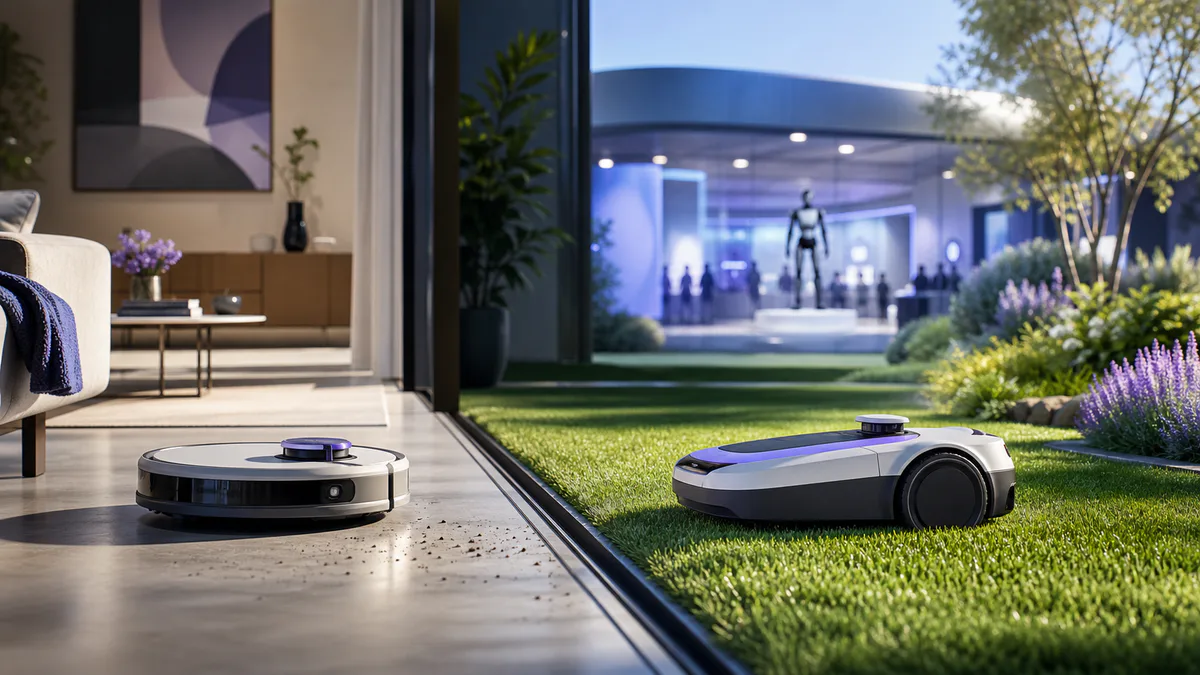
For buyers, the honest summary is narrower: the robots that run dependably and unsupervised in a home are still vacuums, mowers and pool cleaners. Everything else is supervised, novelty, or a research preview.
Where the consumer action actually is
The front line for home buyers is the robot-vacuum dock. Manufacturers have moved the competition from the machine to the base station. Frandroid reports Eufy positioning its Omni S2 against Roborock on the strength of a "12-in-1" base station, with the price falling sharply — cited at around 500 EUR off.
The dock empties dust, washes and dries mops, refills water and dispenses detergent. Feature counts climb with each release. They are convenient. They are also the part of the product most likely to be quietly simplified, run out of consumables, or need manual cleaning months in.
At the value end, the contest is more direct. Gizmodo has run head-to-heads such as the Roborock Qrevo S Pro against the QV 35A. These matter more than the flagship spec war, because most buyers are choosing between two mid-priced machines, not chasing the most-loaded dock on the shelf. Our robot vacuum comparisons are built on the same premise.
Spec sheets don't predict cleaning
The most useful corrective comes from the testing. Les Numériques now puts robot vacuums through real-world messes — "from dust to ketchup" — because suction ratings and feature lists do not predict how a machine handles a sticky spill or a carpet edge. A high pascal figure on the box tells you little about whether the robot recovers from a stuck wheel or misses the same corner every run.
This is the judgement we apply across our comparisons: the relevant question is what the hardware still does reliably after a few months, not what it managed in a controlled demo. The best robot vacuums guide is built around that test, and the glossary explains the terms vendors lean on.
Frontier autonomy still hits edges
The clearest reminder that capability and reliability are different things comes from the most advanced consumer autonomy on the road. The Register reports that Waymo paused some robotaxi operations after vehicles repeatedly missed signs for freeway construction zones. This is a heavily funded, heavily mapped system, and it still trips on edge cases.
The lesson carries down to the home. A robot that performs well in the common case can still fail predictably at the awkward one. For a robotaxi, that is a safety pause. For a vacuum, it is a missed room or a tangled mop — lower stakes, same gap between the claim and the daily result.
On price, wait for the swing
Robot-vacuum pricing is volatile and moves around sale events. ZDNet notes that early Prime Day pricing already shifts home-robotics-adjacent gear well before the headline dates. The Eufy discount Frandroid cites is a further sign that "flagship" prices are soft.
Two consequences. First, the launch price is rarely the price you should pay; top-end models can drop hundreds within months. Second, a steep discount on a high-end dock can beat full price on a mid-tier model — but only if the core cleaning holds up. Discount the feature count, not the cleaning. Our robotics coverage tracks where those prices land.
The buying take
The growth is genuine, and it will keep producing impressive demos. None of it changes the practical advice for 2026:
- Buy for the reliable job. Vacuums, mowers and pool cleaners work unsupervised. Treat anything else as supervised or experimental.
- Judge the cleaning, not the dock. A 12-in-1 base station is convenience, not performance. Real-world mess testing predicts satisfaction; spec sheets do not.
- Expect edge-case failures. Even frontier systems miss the awkward case. Assume your robot will too, and weigh how it recovers.
- Time the price. Flagship robot-vacuum prices swing hard around sale events. Patience is worth real money.
The industry is moving fast. For your home, the dependable machine is still the narrow one, and that is the one worth your money.